Shop
Details

Heritage

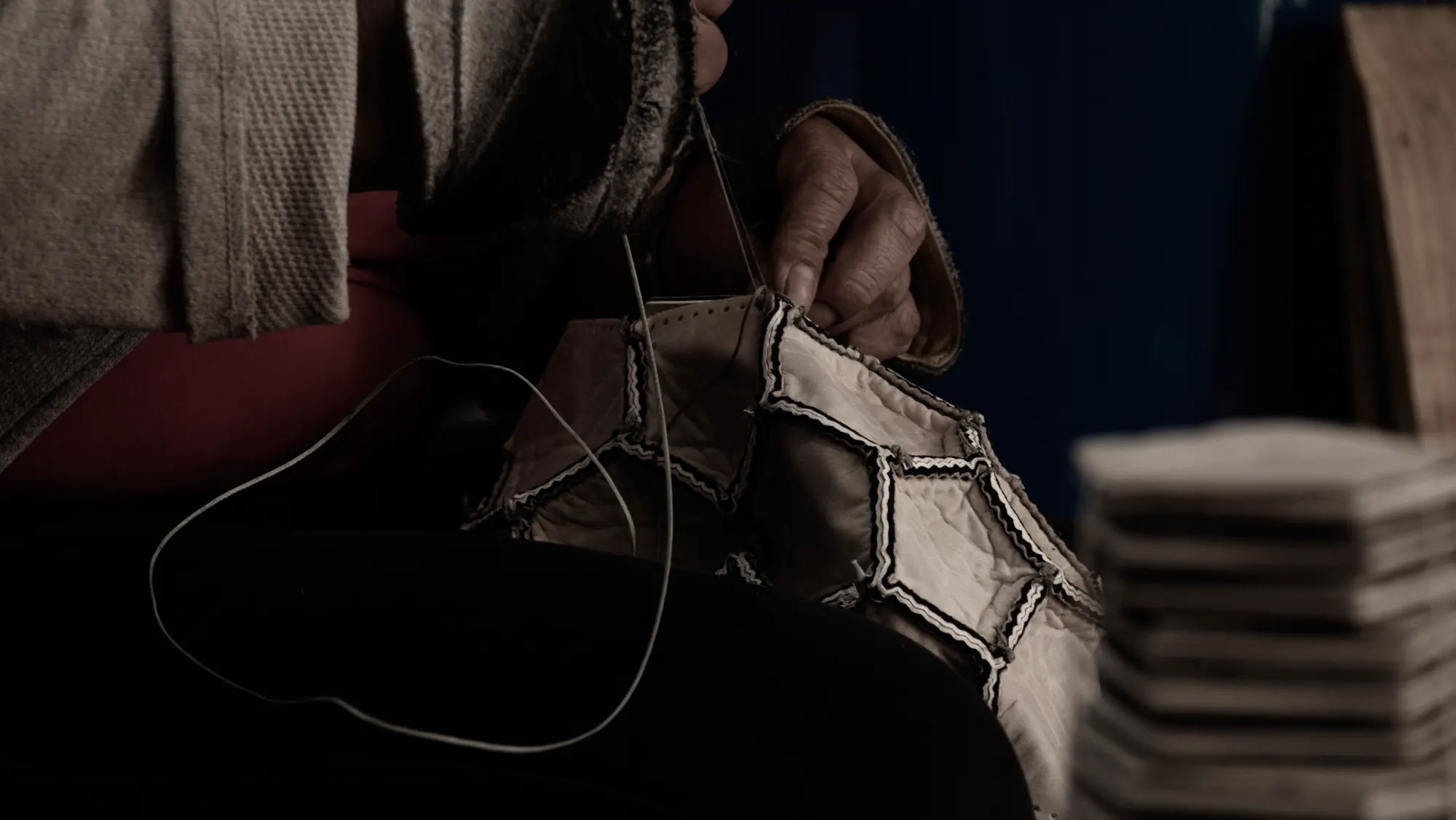
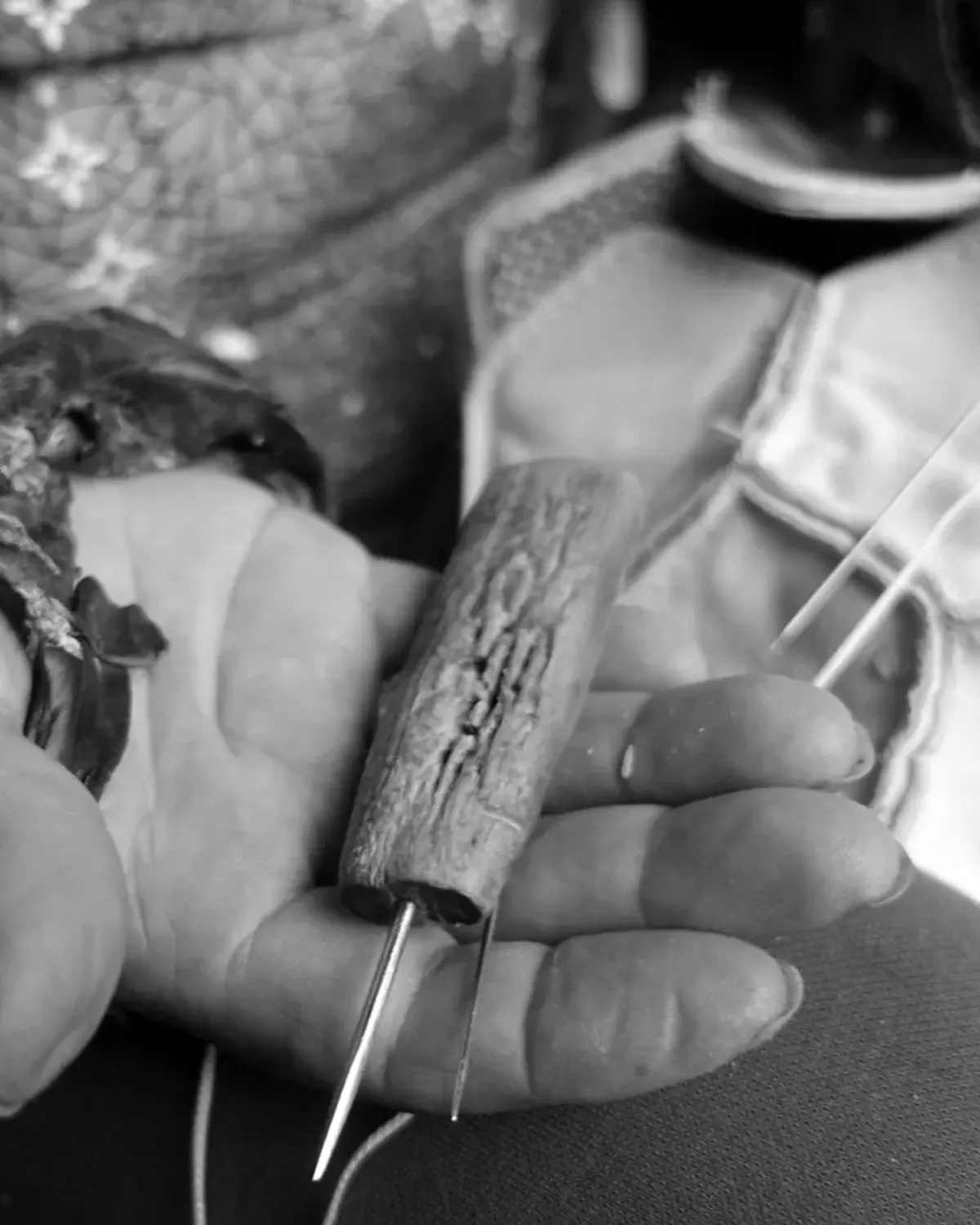
A ballmaker's hands stitching a Hayworth ball panel by panel in the Monguí workshop.

Designed in Austin.
Made by hand in Monguí.

Hayworth is designed in Austin, Texas. Every ball is made by hand in Monguí, in the Colombian Andes, by master ballmakers who have passed down their art through the generations.

Much of this industry has been built on underpaid labor. We chose a different path: to treat the craft with the distinction it deserves, to keep a healthy workshop, and to make sure the people who practice it can live full and healthy lives.

01

Origin

Froilán Ladino · 1932

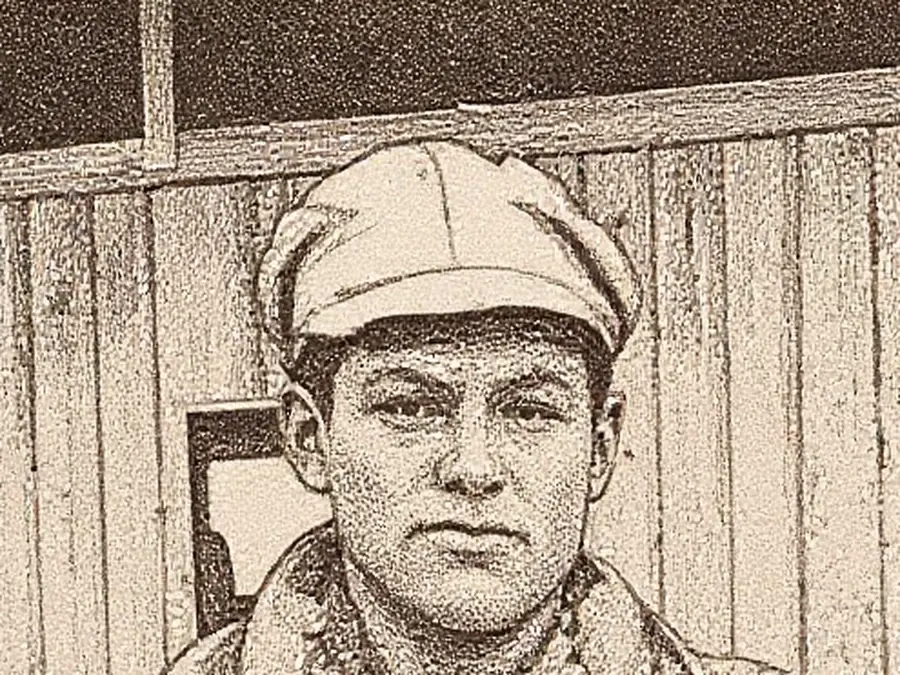
Froilán Ladino, the conscript who carried the ball-stitch home to Monguí, drawn from a photograph.
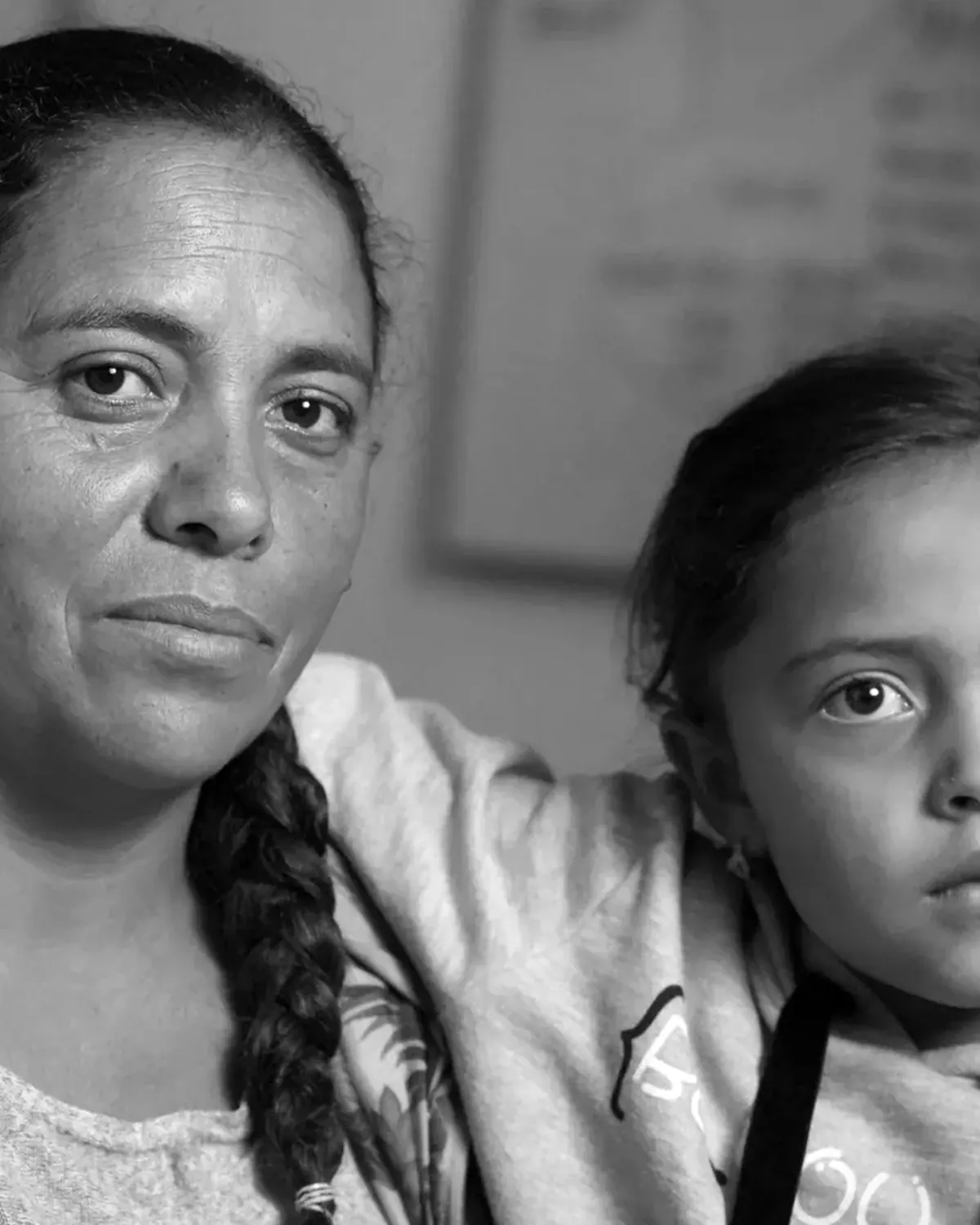
A ballmaker and her daughter in the Monguí workshop.

Libertad, the first football entered on a Colombian register. Monguí, Boyacá, 1938.

Libertad

The Hayworth Letter · No. 02 · The First Ball

Monguí, a cold stone town at ten thousand feet in the Colombian Andes, is known for two things: a poet who memorized a hundred and fifty poems, and a ball. A conscript came home from the Amazon with a stitch, taught it to twelve farmers the town still calls the twelve apostles, and in 1938 registered Libertad, the first football Colombia ever recorded.

02

The Decline

Sialkot, Pakistan · 2026

The craft is disappearing.

Sialkot, about 202080–90%
Sialkot, 202620%

Of every hundred balls the world ships

Two are stitched by hand

Hand-stitched share. Sialkot’s own mix from Anwar Khawaja Industries, reported by Al Jazeera and the LUMS Centre for Entrepreneurship, 2026. The world figure is our arithmetic from that mix, Sialkot’s 60 to 70 percent share of the world’s hand-stitched balls, and UN Comtrade 2024, which counts every inflatable ball traded, footballs among them.
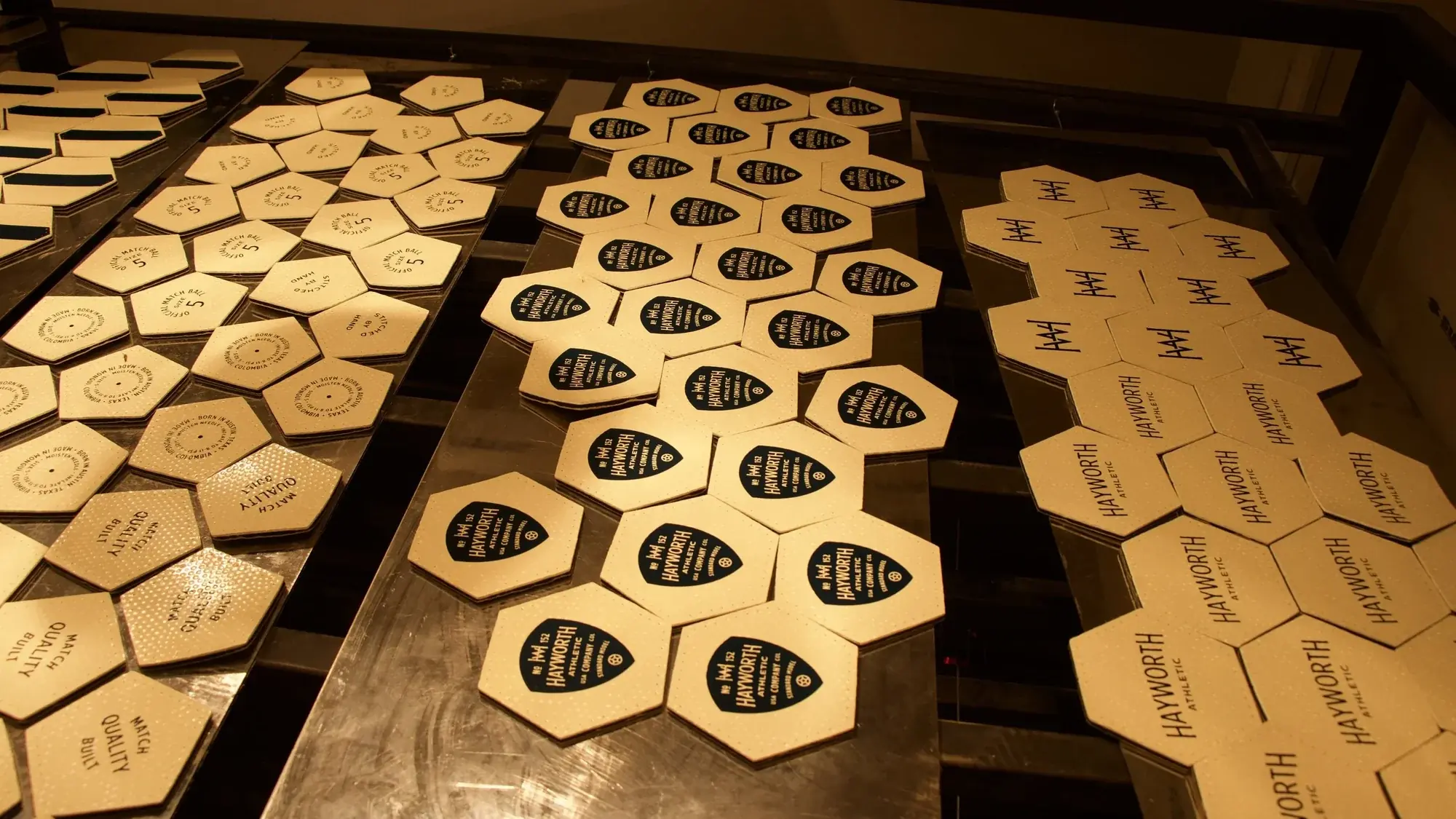
Freshly painted panels drying on the bench in the Monguí workshop before assembly. Photograph by Nilson Ceron.

Most of the world’s hand-stitched balls still come from Sialkot, in Pakistan. Khurram Khawaja, whose family firm has made balls there for decades, puts it plainly: five or six years ago hand-stitching was 80 to 90 percent of what Sialkot made, and today it is about 20 percent. He expects it to leave mainstream production within a decade.

And Sialkot is a small corner of the trade. China exported 637 million balls of every kind in 2024, at an average of $1.38 each. Pakistan exported 54 million at $4.60. Nothing leaves a factory at a dollar thirty-eight with a needle through it by hand. Sialkot hand-stitches about a fifth of what it makes, and it is around two thirds of the world’s hand-stitched balls. Against the 814 million balls the world shipped in 2024, one can estimate that about two in a hundred are stitched by hand.

A machine operator finishes 50 to 70 balls in a day. A hand stitcher finishes three, or five by the Sialkot makers’ own count. In one Sialkot stitching center, a woman who completes five match-quality balls in a day earns a little more than six dollars.

That is the economics ending the craft: the hours are real, and almost nobody pays for them. Hayworth pays for them.

03

The Case

Stitched and bonded

The most important thing a ball can do is go where you want it to go.

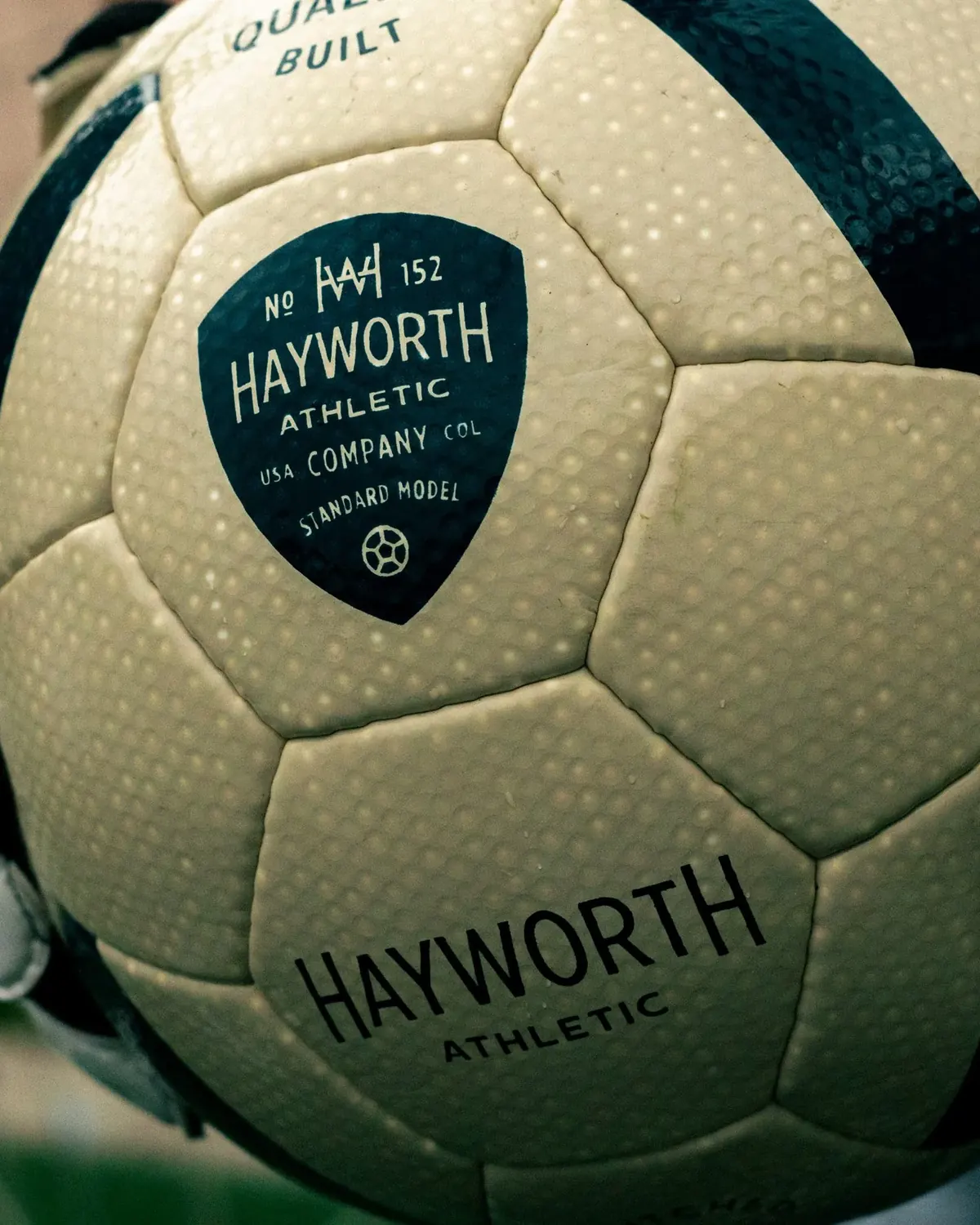
A No. 152 held in goalkeeper’s gloves. Photograph by Javid Gomez.
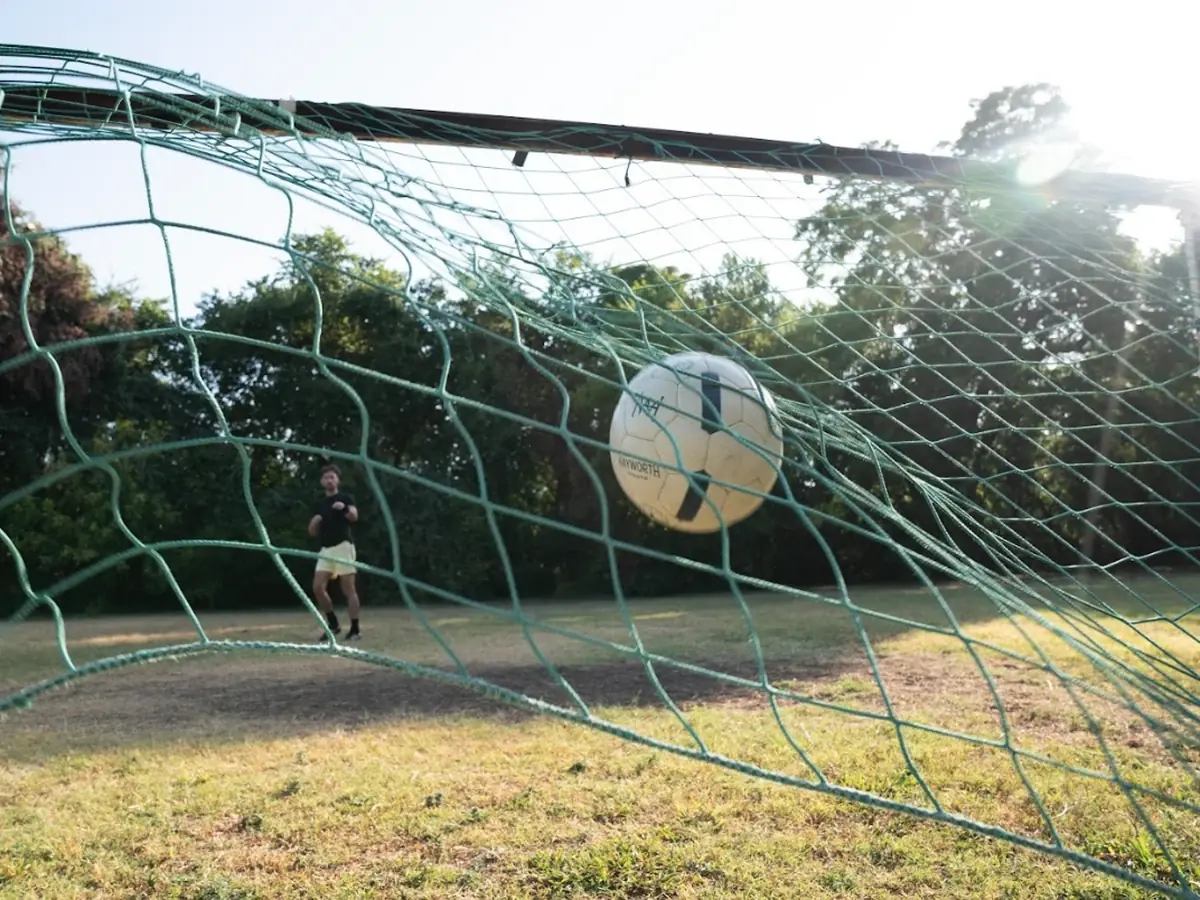
A No. 152 in the back of the net. Photograph by Kate Liddy.

That is decided at the seams. In 2010 the World Cup ball was the smoothest yet tested, eight bonded panels with the shortest total seam length and the shallowest seams of any ball tested, and it flew so unpredictably that players said so in public. The wind tunnels explained why. With too little roughness the air clings to the ball to a higher speed, and past that speed the flight breaks up.

Every World Cup ball since has been made rougher on purpose. The 2014 ball carried roughly 68 percent more seam length. The 2026 ball is four bonded panels with deliberately deep seams, debossed lines and a textured skin, which its maker describes as giving stability in flight.

Take two balls, identical but for the width and depth of their seams. Hit them the same way, hard and with no spin. They will not land in the same place. The gap can be four meters, long or wide.

Four meters is the difference between the top corner and the third row.

So the depth of the seam is the ball. Thread pulls two panels together and leaves a valley where they meet. Bonding presses them flat and leaves a line. A hand-stitched seam is deeper than a bonded one, which is why this year’s World Cup ball has its grooves pressed in deliberately. They are a manufactured version of the very thing we are preserving.

Their ball has advantages and we will name them. A bonded ball is more uniform, spherically, and slightly more water resistant than a hand-stitched ball. It costs a fraction to make. It carries a FIFA license we have not bought, because that money buys a logo and we would rather spend it on the ball.

What you get for the trade is the seam. Thread under tension holds the ball’s shape, and the shape is what makes the flight repeatable. A stitched seam outlasts a pressed one: a former professional called it the most durable ball he has trained with. You are buying the original of the thing the biggest brands in the game are now paying engineers to simulate.

The more perfect a ball is, the more likely it is to be erratic.

Hayworth’s founder, The Athletic, January 2025

The perfect ball is not perfect. It is perfect because of its imperfections.

04

The Town

Monguí, Boyacá · 4,500 people

Keeping the craft alive keeps the place that practices it.

Ballmaking in Monguí
90+ years
Ball workshops in Monguí
About 45
Balls a stitcher finishes
3 a day
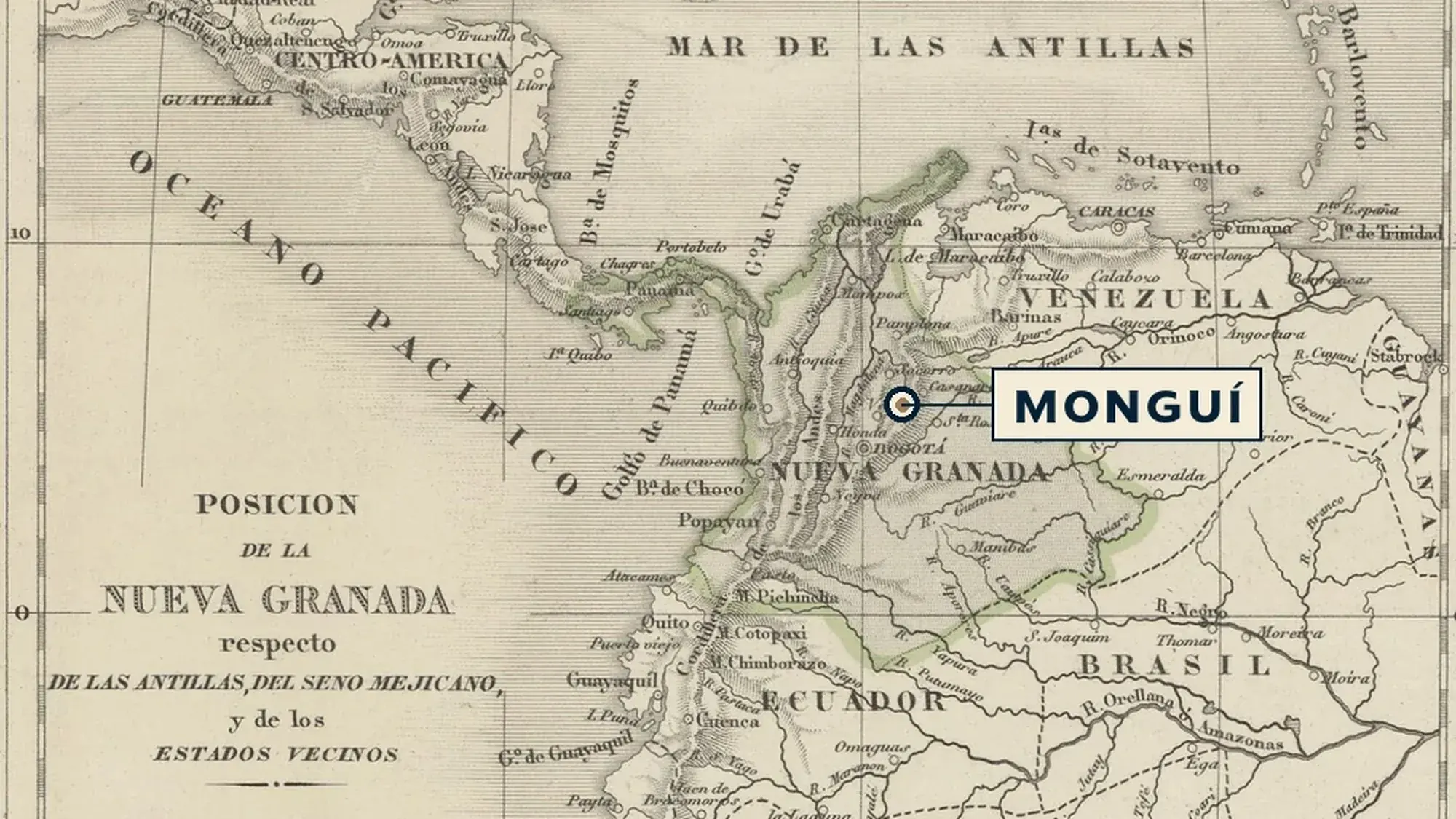
Monguí marked on an 1847 map of Nueva Granada, the Caribbean and the Gulf.

Monguí has made balls for more than ninety years. From the 1940s through the 1980s hundreds of families lived from the trade. Today about forty-five ball workshops remain, most of them family-run, working against cheaper imported balls. Most have moved to vulcanizing machines: one line in town turns out up to two hundred balls a day, while a hand stitcher finishes three. How many still sew by hand is not a published number, and it is smaller every year.

Every ball we sell is three hours of somebody’s hands in a town that has done this for four generations, paid for at a rate that lets them keep doing it. A skill only survives while it is practiced. Monguí put a woman stitching a ball in its plaza, in stone.

05

The Workshop

Guillermo Blanco and Jhon Fred

The Foundation of Quality

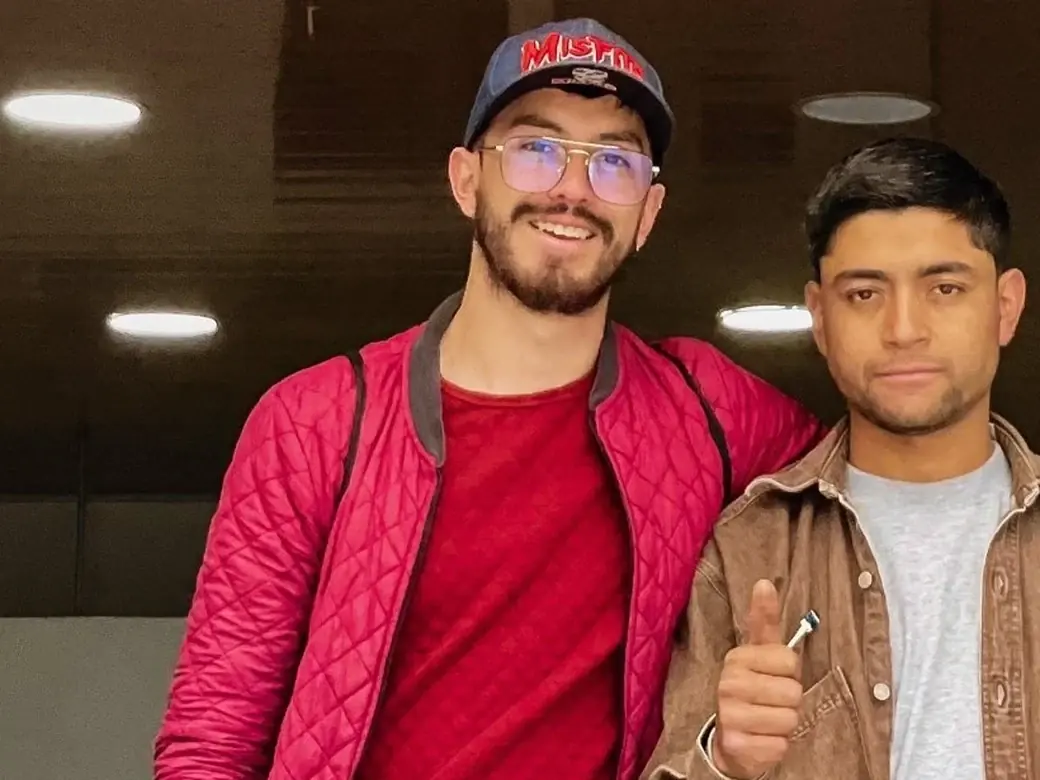
Jhon Fred and Guillermo Blanco outside the Monguí workshop.
A ballmaker’s hand holding the awl and waxed thread beside a half-stitched ball.

We don’t view this craftsmanship as a marketing point; we view it as a foundational fact. What we are building is only made possible by the near extinct expertise and rare art of our Andean workshop. It is a bridge between two worlds: the tactical demands of the modern game and a lineage of craft that refuses to be rushed.

06

Films

2023 and 2026

Hayworth Athletic · 2023

The Story of Hayworth Athletic

In 2012 Hayworth’s founder went to Sialkot, Pakistan, where most of the world’s hand-stitched soccer balls are made, and saw both the beauty of the craft and the exploitative labor behind it. Six years later he found a village of ballmakers in Monguí, Colombia. The second person he met there was Guillermo Blanco.

NBCUniversal Telemundo · 2026

Cultura de la Cancha

In July 2026 a crew from Cultura de la Cancha (S1 E5), a documentary series aired on NBCUniversal Telemundo, brought its cameras into the Monguí workshop of Good Stitch SAS, Hayworth’s manufacturing arm in Colombia. Guillermo Blanco showed them the build. Jhon Fred went on hand-stitching while they filmed, the way every Hayworth ball is made. The workshop segment begins seventeen minutes in.

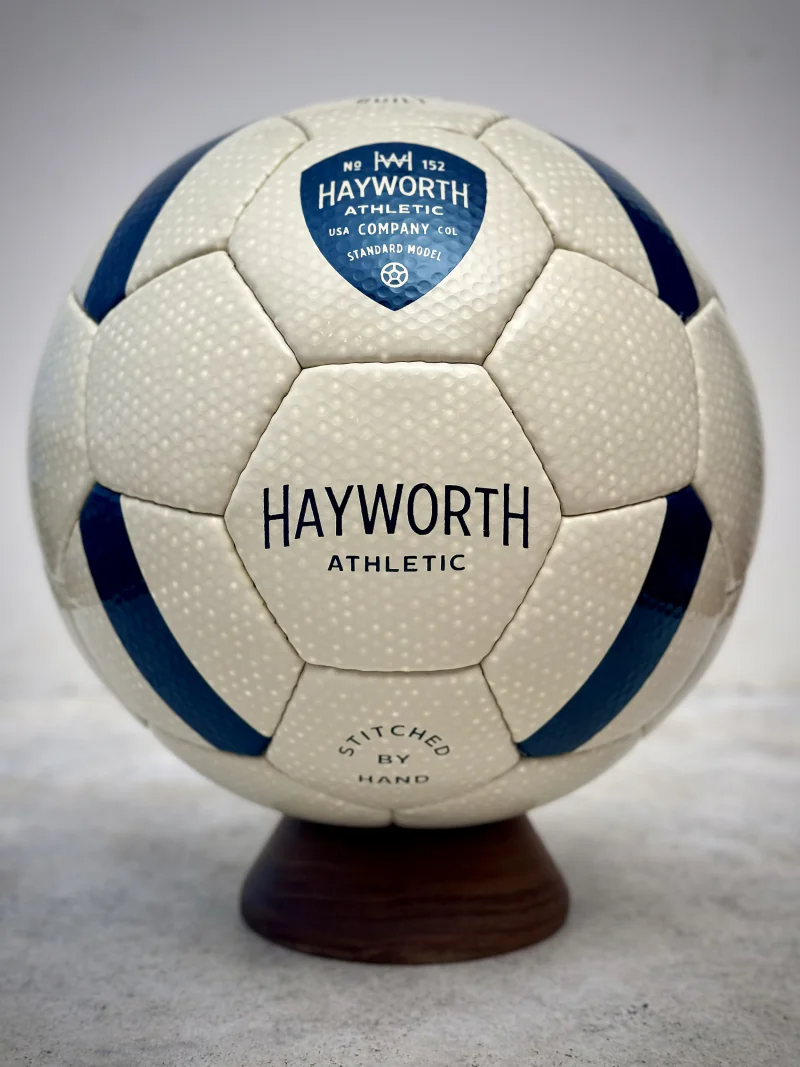
The Standard Model No. 152, hand-stitched in Monguí.