Shop
Details

Details

Standard Model No. 152

The anatomy of a ball.

Layers

Cover, mid-layer, core

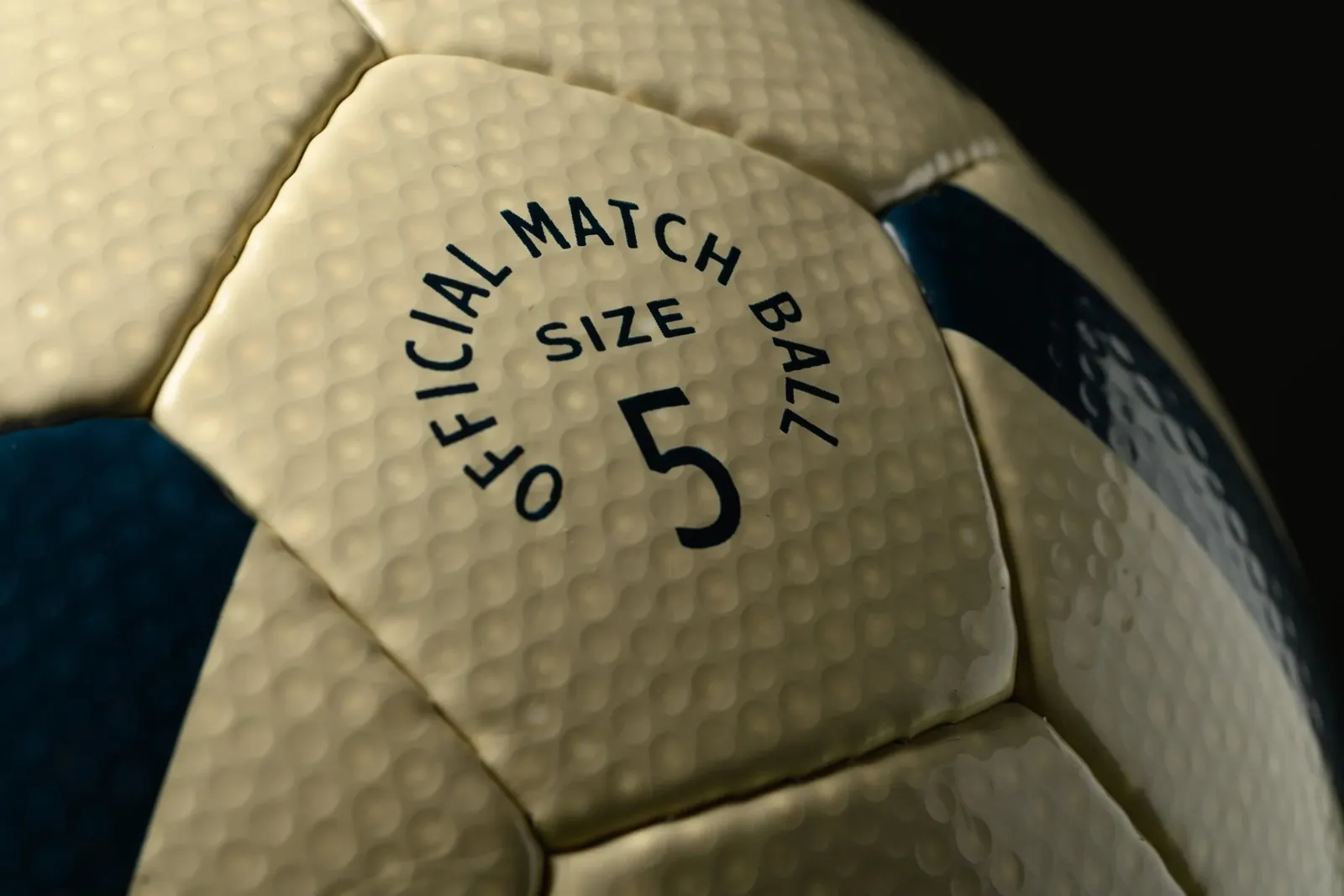
Close-up of a No. 152 panel, showing the embossed polyurethane surface and the printed match-ball mark.

01 · Surface Layer

Cover

Cover Material
1.5mm Polyurethane Leather
Cushion Layer
2mm EVA Foam
Surface Finish
Hand Screen-Printed, Scuff-Proof Paint
Water Resistance
Thermo-activated Seam Sealant
Surface Texture
Golf-ball embossing for superior flight and accuracy

Professional-quality 1.5mm PU leather with a 2mm EVA foam cushion for sublime touch. Water-wicking for all weather conditions.
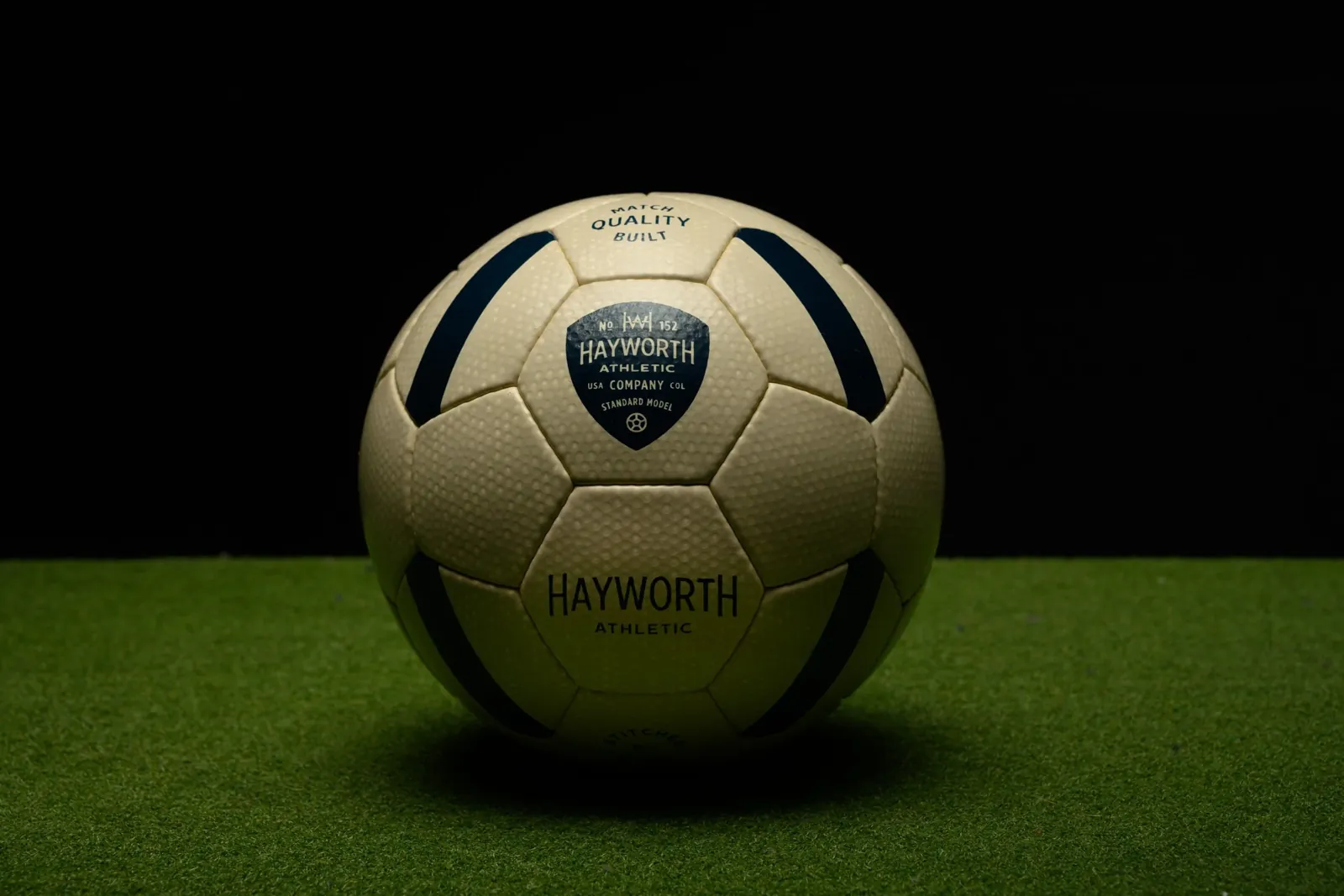
The Standard Model No. 152 on turf against a black background.

02 · Mid-Layer Construction

Mid-Layer

Panel Count
32 Hand-Cut Hexagons & Pentagons
Stitch Type
Hand-Stitched
Thread
Italian Waxed Polyester
Construction Time
Up to 3 hours per ball
Sub-Layers
Uniquely cross-hatched canvas, ammonia-free latex lining

Built to match-ball specification. Proprietary seal-adhesion technique for exceptional water resistance.

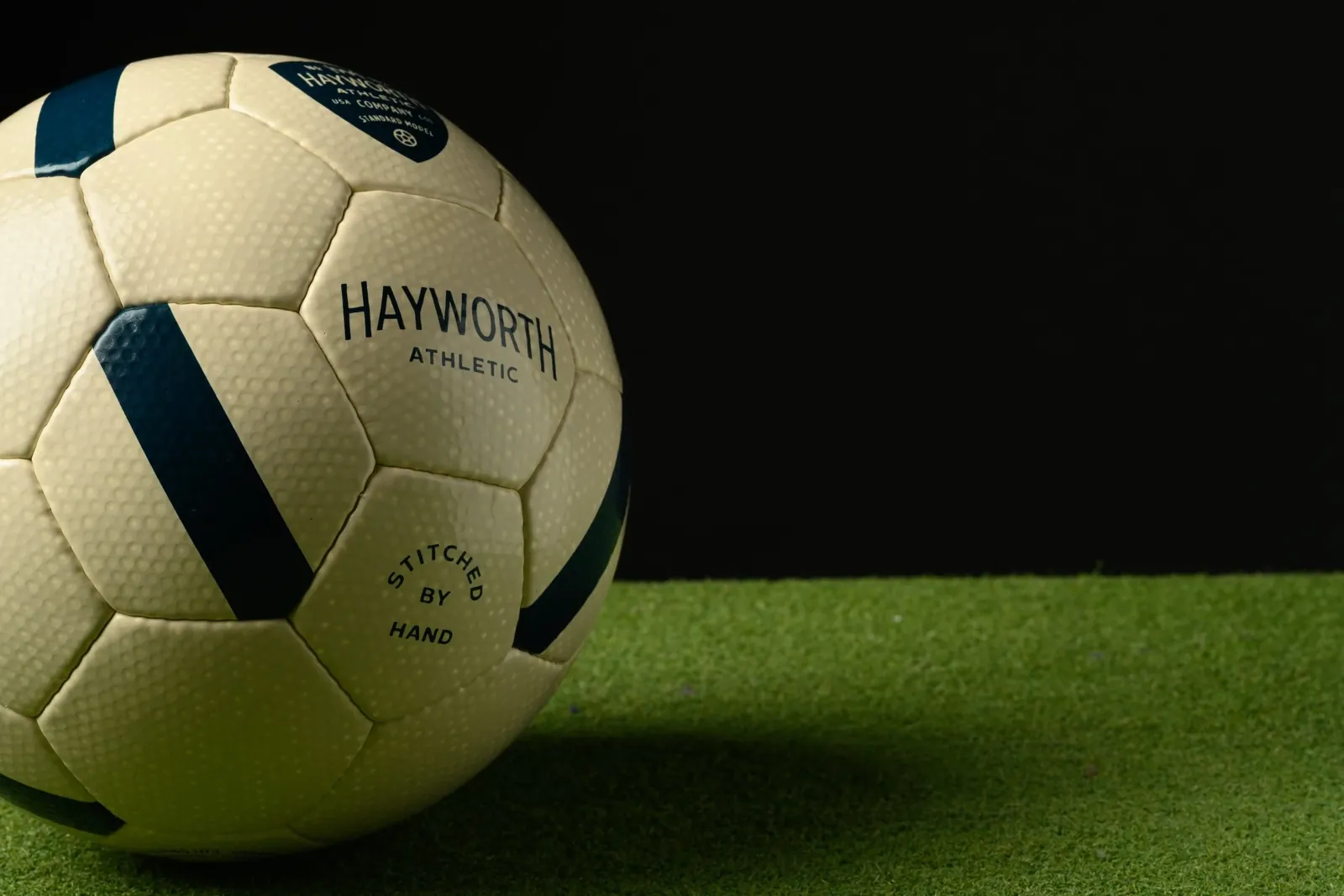
The No. 152 on turf, its Stitched by Hand panel turned to the light.

03 · Core Components

Core

Bladder Type
Seamless Latex
Air Retention
Excellent, tested for consistent pressure
Spring
Outstanding, time-tested latex construction
Quality Check
Three-axis sphericity inspection
Origin
South American ammonia-free liquid latex

Seamless latex bladders for outstanding spring and excellent air retention, match-ball specification.

Size 5 · Ages 13+ · $135Size 4 · Ages 8–12 · $108

Process

Monguí, Colombia

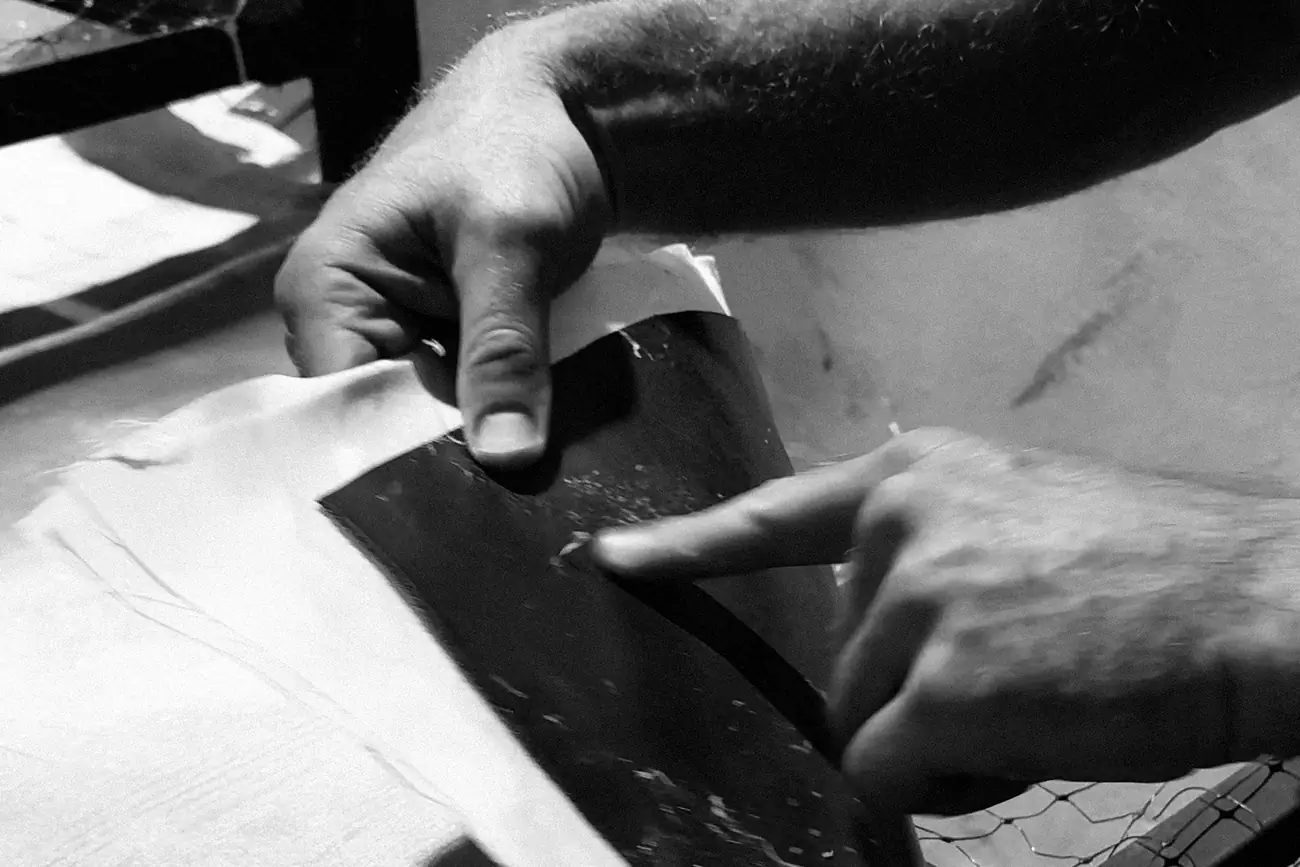
Two hands peeling a layer back from a latex-coated canvas sheet in the workshop, in black and white.

01

Layers

It begins with the layers. Canvas is layered with latex and dried in a kiln.

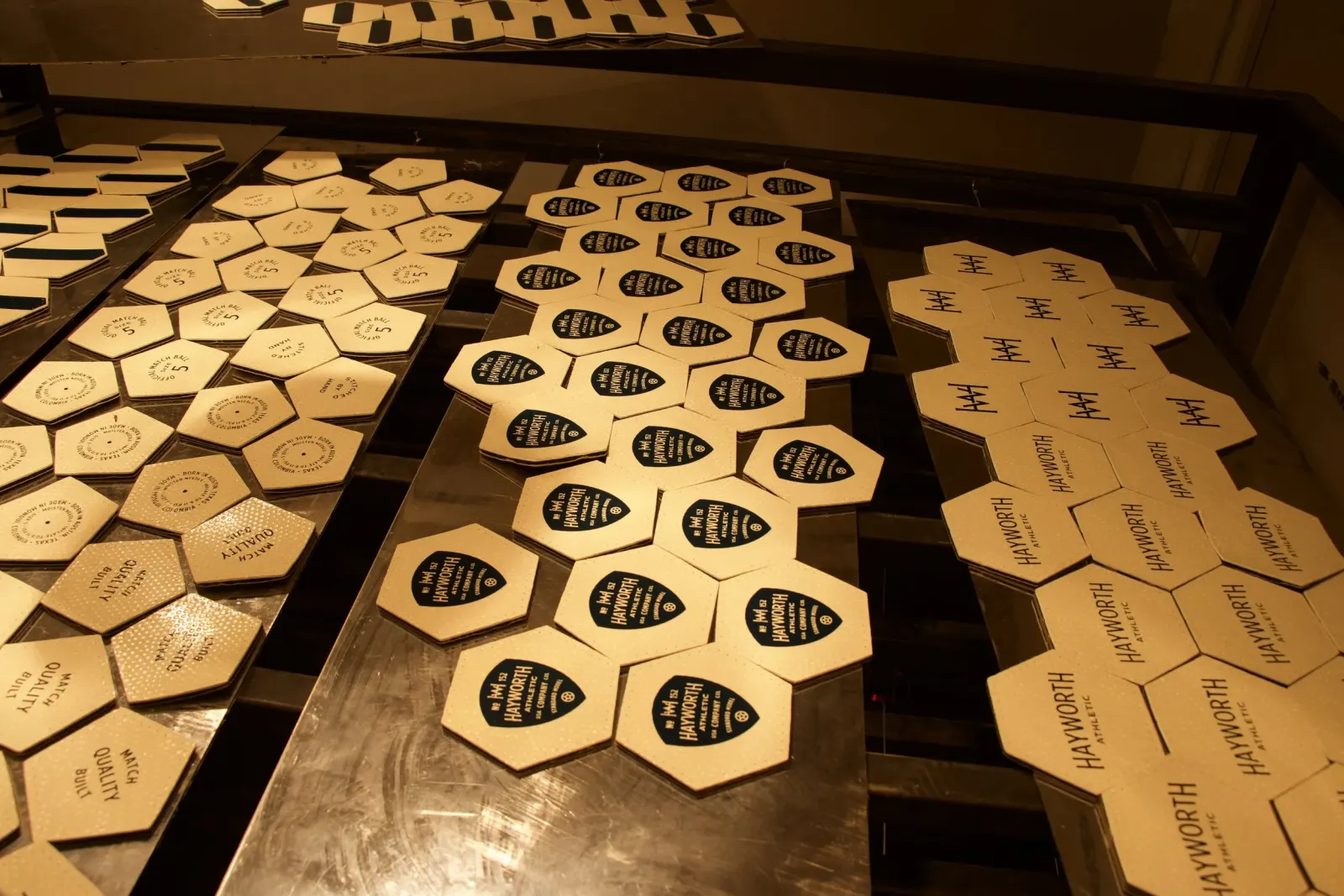
Cut hexagon and pentagon panels laid out on a workshop table.

02

Panels

The dies, troqueles, are cut by CNC machines. Each panel is then cut by hand, one at a time.

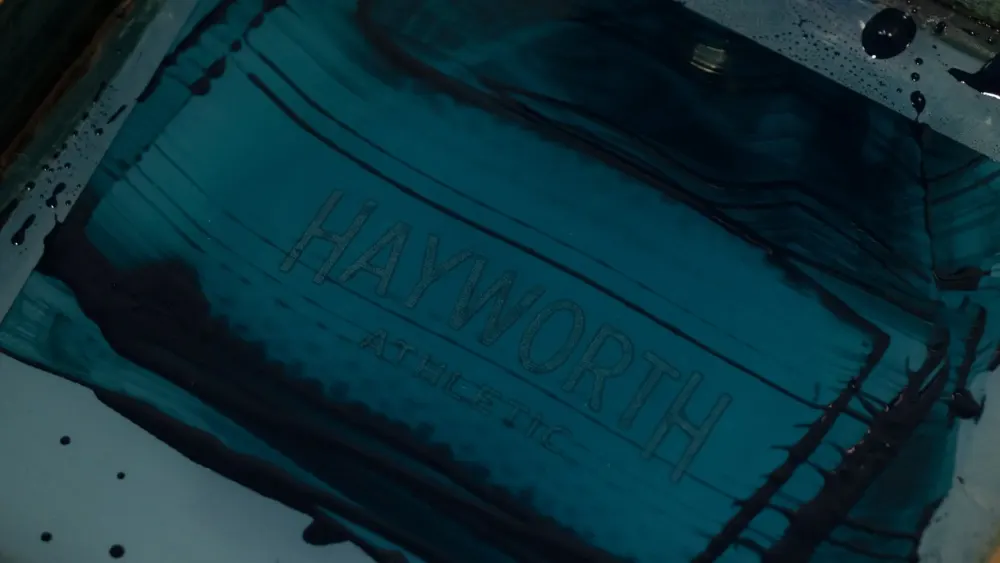
The Hayworth mark on a screen-printing frame.

03

Hand Screened

Before stitching, the Hayworth mark is screen-printed by hand with imported scuff-proof paint, and each panel is coated with a thermo-activated seam sealant for water resistance.

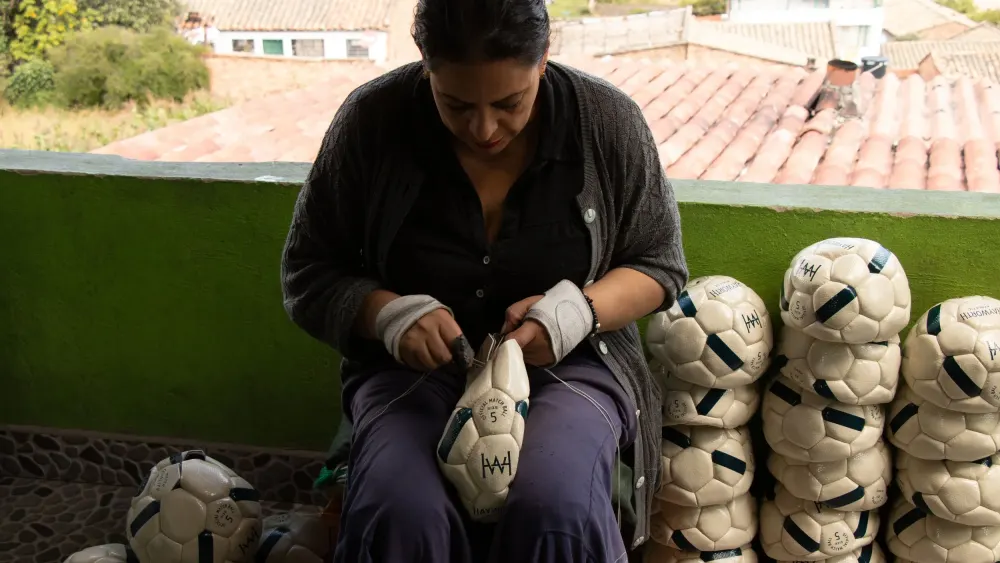
An artisan hand-stitching a Hayworth ball on a balcony in Monguí, finished balls stacked beside her.

04

Hand Stitched

Thirty-two panels, sewn by hand with high-strength waxed thread. Up to three hours per ball. Hand-stitching makes deep, reinforced seams and the structural tension that gives the ball its durability.

Questions

Craft soccer balls

What is a craft soccer ball?

Nearly every soccer ball sold today is machine-bonded in a large factory, built to be identical and built to be replaced. A craft soccer ball is the alternative: hand-stitched in small batches by named makers who are paid properly, from materials chosen for feel rather than cost, built to be kept. Small batches also make the ball a canvas. Panels can carry an artist’s work, and a new material can be tried one batch at a time, which a production line cannot do. Hayworth Athletic makes craft soccer balls, designed in Austin, Texas and hand-stitched in Monguí, Colombia.

Is hand-stitching disappearing?

Yes. Most of the world’s hand-stitched balls still come from Sialkot, Pakistan. Five or six years ago hand-stitched balls were 80 to 90 percent of what Sialkot made; today they are about 20 percent, as machine stitching and thermal bonding take over. A machine operator can finish 50 to 70 balls in a day. A hand stitcher finishes two to three. (Al Jazeera and the LUMS Centre for Entrepreneurship, 2026.)

Where are Hayworth balls made?

Hayworth balls are designed in Austin, Texas and hand-stitched in our workshop in Monguí, Boyacá, in the Colombian Andes, a village with a generations-long tradition of ballmaking.

How is a Hayworth ball made?

Canvas is layered with latex and dried in a kiln. The dies are cut by CNC machines, and each panel is then cut by hand, one at a time. Before stitching, the Hayworth mark is screen-printed by hand and each panel is coated with a thermo-activated seam sealant. Then the panels are stitched together by hand with waxed thread.

How long does a Hayworth ball take to make?

Every Hayworth ball is stitched by hand. The Standard Model No. 152 takes up to three hours of hand-stitching per ball.

What makes a craft soccer ball different from a regular soccer ball?

A regular soccer ball is machine-made in a factory. A Hayworth ball is hand-stitched by master ballmakers in Monguí. The Standard Model No. 152 is built from 1.5mm PU leather and Italian waxed thread, and took 152 prototypes to develop. It is designed to last longer than mass-produced training balls.

What comes in the box?

Every Hayworth ball arrives in a Hayworth presentation box with an iron-branded, hand-hewn plinth and a robust pump needle. Free shipping on all U.S. orders.

What is a good gift for a soccer player who has everything?

A craft soccer ball. Every Hayworth ball is hand-stitched by master ballmakers in Monguí, Colombia, in a small workshop that focuses on fair wages, and arrives in a Hayworth presentation box. It is a gift for anyone who values things made by hand and the people who make them. The Standard Model No. 152 is $135 and has 44 reviews at 4.98 stars; former USL professional Greg Mulamba called it the most durable ball he has trained with.